The cause is usually an empty field
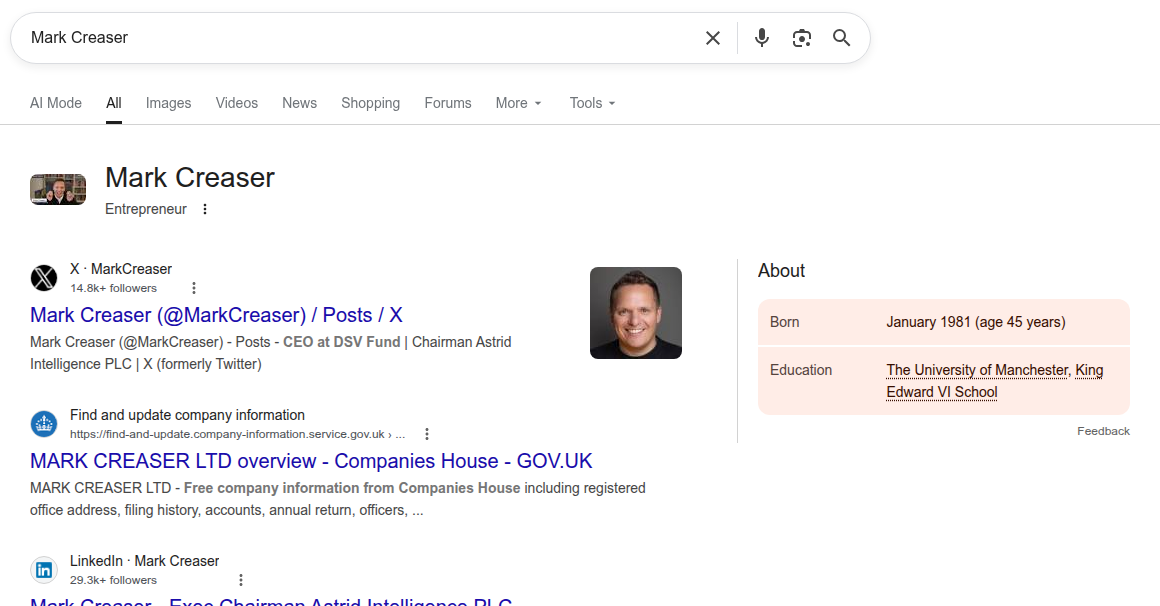
Where the underlying record carries no image, Google chooses something it already has, and what it has is whatever is most strongly associated with your name. That is how a video still, a conference photograph taken from the side, or somebody else entirely ends up in the box.
Two of the three images Google showed for one client were of a different woman with the same name, married to a musician. There was nothing wrong with her own photographs. There was simply nothing anywhere a search engine could read that said which ones were hers.
The fix needs a free licence, not just your permission
Getting your own image into the underlying record means putting it somewhere that only accepts freely licensed work. Your permission for us to use a photograph on your own page is a different thing and it does not travel.
So we split the question in two, deliberately. A licence covering your own hosted page is one tick. A free licence that lets the image reach the open record is a separate one. A client who cannot grant the second still gets a photograph on their page, and nobody is held back from publishing because of it.
A free licence is irrevocable and it lets anybody reuse the image for anything. That is a real decision, not a formality.
You probably do not own your own headshot
Under UK copyright law the photographer is the first owner unless it was assigned to you in writing. Paying for the shoot does not transfer the copyright. They emailed me the file is not permission, and a licence to use it on your website is not a licence to put it anywhere else.
This catches almost everybody, including people who have used the same headshot for a decade. It is why we ask about the rights position before a photograph is published rather than after, and why a missing answer holds the picture back without holding the page back.
A properly licensed photograph can still be removed from an open repository as out of scope if the subject is not notable enough for it, which is the same bar that governs the record itself.
What to do about it
In order:
- Find out who actually took the photograph and what you were granted in writing.
- If it was a commission with no assignment, ask for one. Most photographers will, for a named purpose.
- Decide separately whether you are willing to licence it freely, knowing that is irrevocable.
- If not, the panel image stays Google's choice, and the realistic lever is making sure the images it does have of you are the right ones.
Mark Creaser's panel showed a video still because the underlying record carried no image property. Cause identified by reading the record rather than guessing at it.